Autoimmune disease is, overwhelmingly, a woman’s problem. Roughly four out of five people living with lupus, scleroderma, rheumatoid arthritis and their cousins are women, and for as long as I’ve been reading this field the explanation has stopped at a polite wave toward hormones. Estrogen, pregnancy, an immune system running hot. I’ve repeated that shrug myself, because there was never much underneath it to point at.
So I did not expect the more honest answer to turn up in a lung.
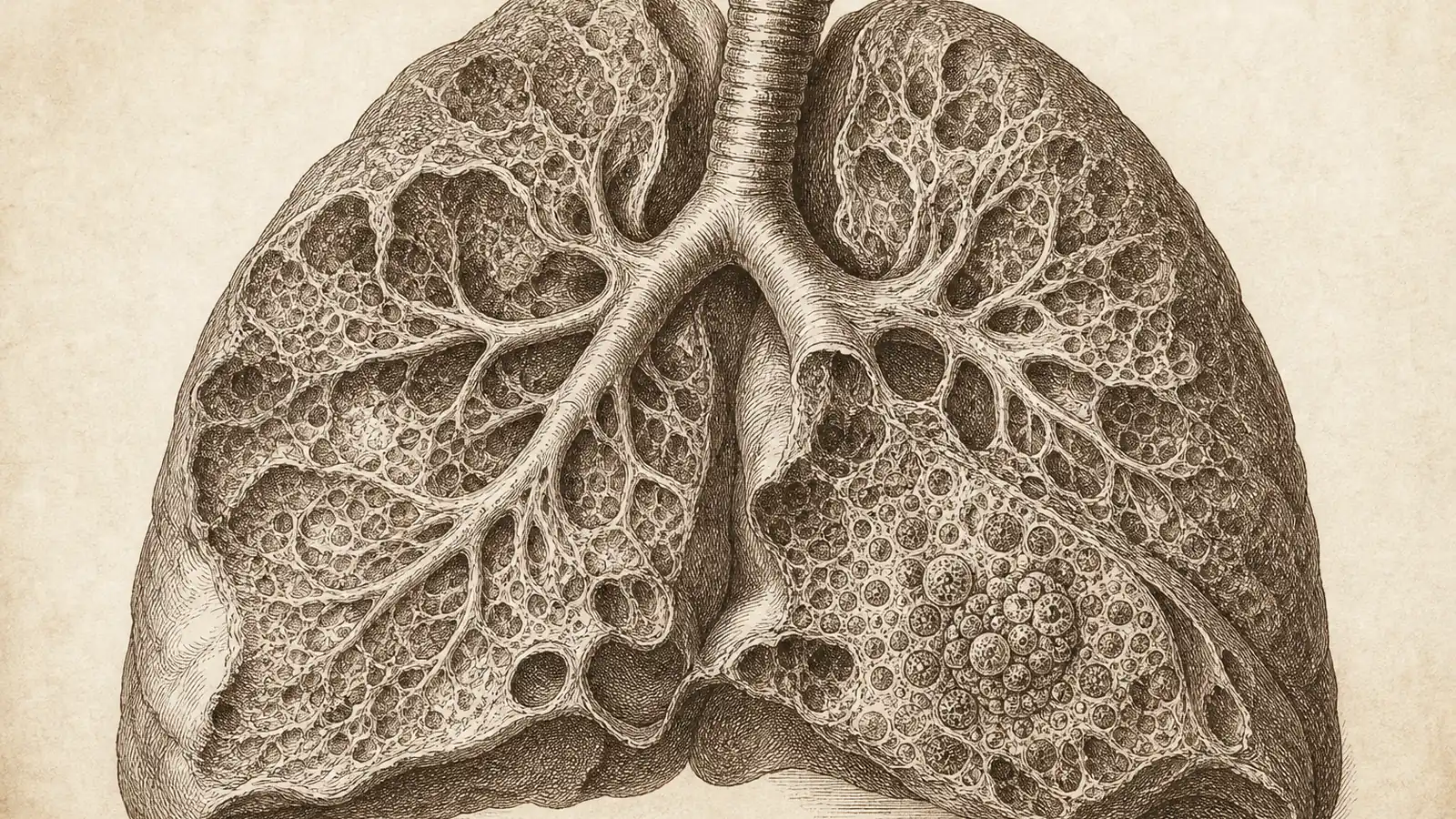
On August 3, a team at the La Jolla Institute for Immunology published an atlas in Nature Immunology built from 1.1 million immune cells pulled from the lung tissue of 128 people. Not blood. Actual tissue, the healthy margins trimmed away during lung-cancer surgery, the kind of sample almost nobody gets to study at scale because you cannot ask a living person for a chunk of their lung. When the researchers looked at how genetic risk variants for autoimmune disease behave inside those resident cells, they found something the blood had been hiding.
The reversal is specific. The team, led by Benjamin Schmiedel and senior author Pandurangan Vijayanand, identified about 1,000 genes whose activity is tuned by inherited variants specifically in tissue-resident immune cells, not in the immune cells floating around in blood. Same person, same DNA, same variant. Draw their blood and the genetic effect is invisible. Look inside the tissue, at the cells that have settled in and stayed, and it lights up.
Wait, why would the same risk variant do nothing in a circulating cell and everything in a lung-resident one? A tissue-resident memory cell is not a blood cell that wandered off course. It has physically moved into an organ, dug in, and rewired itself for the neighborhood, switching on a whole residency program of genes its circulating siblings never touch. A variant that dials a gene up or down can only act where that gene is being read in the first place. Put it in a cell running the residency program and it has something to grab. Put it in a blood cell running a different script and it grabs nothing. The risk was never in the DNA sequence alone. It was in which cell, in which tissue, happened to be reading that stretch of the genome out loud.
That reframes decades of work in an uncomfortable way. We have mapped autoimmune risk variants for years, and the workhorse tissue for almost all of it has been blood, because blood is what you can actually draw from a volunteer. It was the streetlight, and we searched under it. One gene, ZFP57, turned up as a shared hub, its tissue-level activity lining up with the genetic signals for multiple autoimmune diseases at once, the kind of common wiring you only see when you are looking in the right cell.
Then the sex finding, the one I keep turning over. The same dataset flagged roughly 1,700 genes expressed differently in women’s lung immune cells than in men’s, several of them sitting squarely on inflammatory pathways. That is not a hormone hand-wave. It is a concrete, countable difference in how a woman’s tissue-resident immune cells read her genome versus how a man’s read his, measured in the settled-in cells rather than the blood that earlier maps leaned on. It does not close the case on why women carry the autoimmune burden. It does something better: it hands you 1,700 specific places to start looking, in the right cell type, instead of another decade of gesturing at estrogen.
I want to be precise about what this is. It is an observational atlas, a map of associations between inherited variants and gene activity, not a trial and not a treatment. Nobody has shown that flipping any one of these genes changes whether a person develops lupus. The 128 donors were surgical patients, and healthy-margin lung is a good sample but not a random one.
And the funding ledger is worth reading out loud. The work leaned mostly on the NIH and the Bowes Foundation, but it also lists industry money from the Japanese drugmaker Kyowa Kirin, exactly the disclosure I want on the table when a foundational dataset starts pointing toward drug targets. Vijayanand calls it “a foundational paper for any researcher asking whether genetics has a role in autoimmune disease,” and for once the institutional quote is not overselling. It is a map, not a cure.
But it is a map of a place we were not looking, drawn from the tissue instead of the vein, and it says the thing women with autoimmune disease have been told to accept as a mystery may just be a measurement nobody bothered to take.
If I were sitting with a lupus or scleroderma diagnosis, here is my concrete takeaway. I would stop treating a standard blood panel as the whole map of my own genetics, and I would not let anyone tell me the female skew of my disease is simply “hormones.” The immune cells that settle into tissue read the genome differently than the ones in my blood, and in a woman they read it differently again, and a routine blood draw may never see that layer. I would want the science funded to go look there, and I would put my attention on the researchers willing to.
Sources
- Nature Immunology – Schmiedel et al., human lung immune cell atlas linking genetic variants to tissue-resident gene expression (2026)
- La Jolla Institute for Immunology – press release on the lung immune cell atlas, funding and personnel
- Medical Xpress – coverage of the study, sex-difference and disease findings
- Signal Transduction and Targeted Therapy – review of tissue-resident immune cells, defining characteristics and roles in disease (2025)
- The Prevalence of Autoimmune Disorders in Women: A Narrative Review (2020)